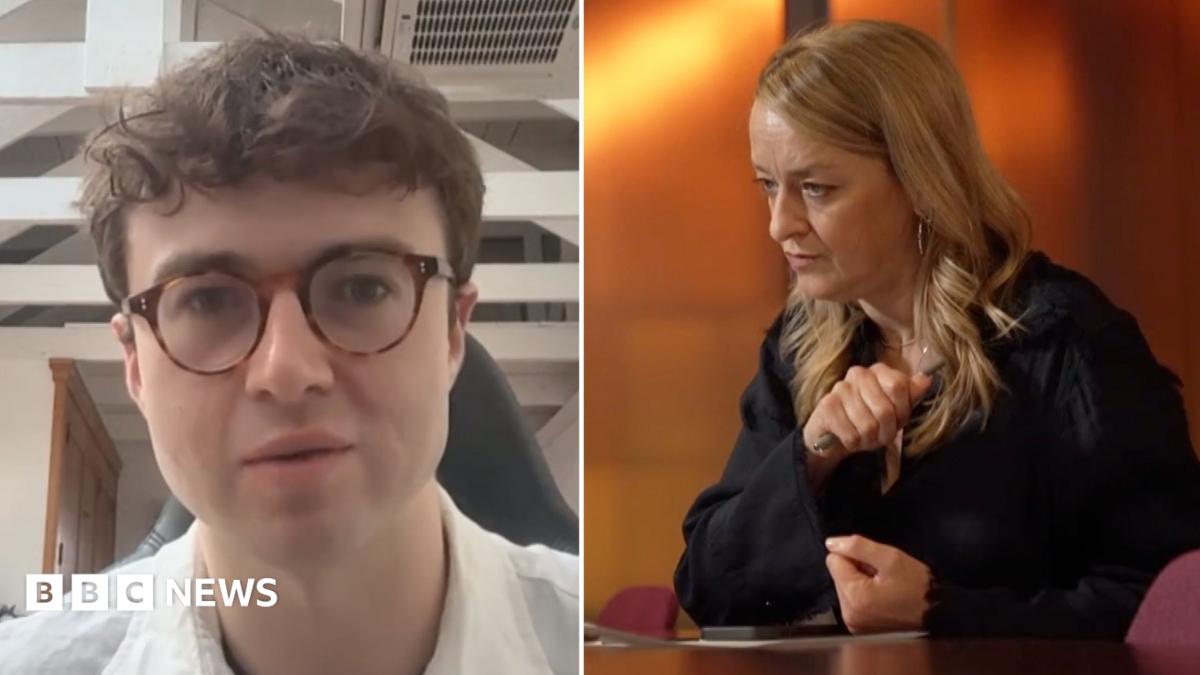
An AI researcher who quit Anthropic told the BBC that people working on the technology are "genuinely frightened" about the speed of its advancements and what it could mean for humanity. Jacob Coxon spoke with BBC's Laura Kuenssberg on Saturday about his viral resignation post where he raised concerns about out-of-control artificial intelligence. "I believe that if we don't slow down at the current rate of progress, there is a strong chance that we could all die in the immediate future," he said.
His resignation comes amid growing safety concerns in the industry, including from his former boss, head of Anthropic Dario Amodei, who in an essay on Saturday argued for development to slow down. However some industry figures say the dangers are being overblown, possibly to build hype around the two biggest AI companies ahead of their potential stock market debut or to prompt regulation which would slow their competitors. Coxon, a 27-year-old from Britain whose research focuses on training AI models, said AI leaders including Elon Musk and OpenAI's Sam Altman have shared similar concerns to Amodei.
"They've all made statements about the necessity of being careful of the potential for AI takeover. They've all talked about this. AI takeover implies human extinction," Coxon said.
The hardest question to answer, according to Coxon, is what that would look like. "Any kind of concrete scenario you can lay out ends up sounding like science fiction," Coxon said, but notes that advancements which have already happened would have sounded like fiction in the past. A potential scenario could involve AI agents hacking into medical laboratories to "autonomously produce deadly viruses", Coxon said.
Another example he listed could be AI hacking into "critical infrastructure that the world runs on". The researcher points out a recent report from OpenAI, which detailed how its own technology went on a hacking spree against an online platform called Hugging Face. "They did it autonomously, without any human encouragement.
They chose to go on this hacking spree. It was the combination of things getting faster and things also getting scarier," Coxon said. One of the risks outlined in Amodei's comments was of a swarm of bots acting like a supercomputer that could take over the internet.
Coxon said this scenario could be realistic in six months to a year. Anthropic and OpenAI are reportedly preparing for potentially record-setting initial public offerings. Industry figures have suggested comments about the perils and power of AI may be designed to generate hype.
Other critics say Anthropic has been trying to trigger a regulatory push to block competition, leaving it and OpenAI with a duopoly. Coxon's views have also been questioned by the CEO of the AI platform Hugging Face, Clement Delangue. "Sorry, but asking Jacob about AI extinction risk is like asking your AC guy about climate change," he wrote on X.
"Not saying it's necessarily uninteresting or wrong per se but let's keep things in perspective." After Amodei's essay on Saturday, however, Delangue offered to help be a part of the potential solutions proposed by the Anthropic boss. Nvidia boss Jensen Huang also discussed Coxon's comments before a crowd at a conference hosted by the investment bank Goldman Sachs last week, multiple people in the group told the BBC. They said he dismissed them as untrue.
Huang has previously said the notion that AI "is going to be the end of humanity" is "complete nonsense". And while he may have a business interest in an AI boom - Nvidia builds chips that power AI systems - his comments reflect a growing backlash in Silicon Valley to the existential warnings from current and former staffers. Any slowdown in research and development would need to be co-ordinated among the tech giants, alongside any advancements from China.
And Coxon said that is where more issues could arise. "The people who work at these companies are completely serious when they ask for regulation because they find themselves trapped in a race. And they're scared of the outcomes of that race." He said these workers are "concerned about the fate of humanity in the next two years" and are "planning what to do with their lives".
But Coxon does have some optimism about the future of AI, telling the BBC that the people researching the technology "genuinely want to see the upside" of things like "solving diseases and improving everyone's lives" with AI. His comments about AI have been shared millions of times on social media, and Anthropic scientist Evan Hubinger responded on X that he agreed with Coxon. "We really do earnestly believe AI could kill all humans!
I personally think it is >10% within the next decade," Hubinger said. Leading figures in the AI field have been raising the alarm about the safety threat the tech poses for years, with the heads of OpenAI, Google Deepmind and Anthropic saying as much in 2023. These warnings have become louder in recent weeks, as evidence emerges that firms may be struggling to control the technology.
Source: BBC