By Aliza Chasan Digital Content Producer Aliza Chasan is a Digital Content Producer for "60 Minutes" and CBSNews.com. She has previously written for outlets including PIX11 News, The New York Daily News, Inside Edition and DNAinfo. Aliza covers trending news, often focusing on crime and politics.
Read Full Bio Keith Sharman Keith Sharman is an Emmy Award-winning producer for 60 Minutes, specializing in major interviews, investigations, and stories about national security, politics, and sports. He has worked at 60 Minutes and CBS News for more than 25 years and has been honored with duPont-Columbia Awards. Read Full Bio Roxanne Feitel Updated on: September 13, 2026 / 7:59 PM EDT / CBS News Add CBS News on Google The Air Force colonel needed help when he crashed over a mountainous part of Iran's desert, separated from his crewmate, the pilot of the F-15E, after being shot down by Iran in April.
The U.S. aviator free-fell to the ground at an estimated 70-100 mph; the Iranian shoulder-fired missile had damaged his parachute. He was the backseater, the weapons-systems officer on a two-man crew with the mission call sign Dude 44. The pilot was Alpha; he was Bravo.
"At one point when I looked up and saw no parachute, that was the most terrifying thing I've ever seen," Bravo said in his first public account of what happened. "So I paused, right then, and I prayed, 'Lord, your will be done. But if I'm getting through this, I need help.'" Help took two days to come.
Bravo, who broke his back, an arm and a shoulder after hitting the ground at such high speed, hid and survived two days behind enemy lines before his rescue . He calls it a "modern-day miracle." "I believe that it's a testament to God's provision in my life to bring me through that moment in a way that didn't prevent injuries, but prevented any catastrophic injuries that would have affected my ability to survive," Bravo, identified by his mission call sign due to security threats, said. Dude 44's mission in Iran, and what went wrong The U.S. military has flown around 13,000 missions so far in the war with Iran , according to Adm.
Brad Cooper, the American commander of U.S. Central Command leading U.S. forces in the Middle East. Dude 44's mission the night of April 2 was near a mountainous area south of the city of Isfahan, close to where Iran had been keeping much of its highly enriched nuclear material .
According to Cooper, Dude 44's mission that night was to conduct a strike on industrial facilities related to Iran's drone and missile program. "We had air superiority, but clearly we weren't flying over Kansas," Cooper said. The $30 million two-seat F-15E, a workhorse of American air combat operations for decades, was brought down by a shoulder-fired missile, which can cost around $100,000.
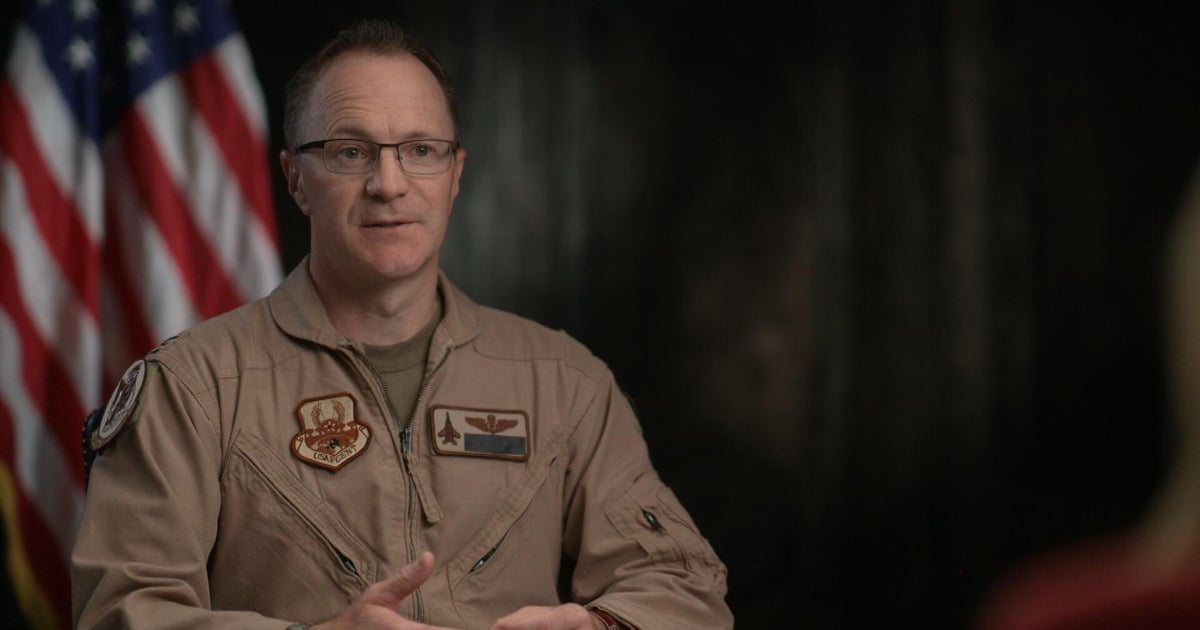
"That day was just another day in the war for us, until the moment where we got hit by an Iranian weapon," Bravo said. Bravo. CBS News How Alpha and Bravo survived When the missile hit, a moment Bravo describes as "getting hit by a freight train," Bravo said he and Alpha did everything they could to try to save the fighter jet.
It quickly became clear the plane couldn't be saved, so the pair ejected. Alpha, who ejected safely and was rescued before Bravo, is already back flying for the Air Force. He declined 60 Minutes' request for an interview due to security considerations .
Alpha expressed his gratitude for the rescue of both himself and Bravo in a statement provided to 60 Minutes. "I am still in awe of the professionalism and tactical prowess of the Combat Search and Rescue specialists and the Joint Force who executed the rescue missions of me and DUDE 44 Bravo, both those in theater and behind the scenes," Alpha said in a statement. "Words cannot capture how thankful my family and I are and how proud I am to serve alongside each and every one of them." 60 Minutes learned that Bravo landed hard, about 5 miles away from Alpha after struggling with his damaged parachute.
"I had injuries, but we all train to adapt and overcome the things that we're faced with," he said. "I moved as quickly as I could, despite the injuries, away from the place that I landed." It was dark out, but Bravo said he began to be able to discern some of his surroundings as the sun came up, like being on an early morning hunting trip. Norah O'Donnell and Gen.
Dan Caine look at video of the rescue. CBS News "And in the heart of Iran, where we were, there are high desert valleys, but also amazing craggly cliffs. And so I find myself in one of those valleys with cliffs on either side," Bravo said.
He realized the safest place to go was up and, despite his broken bones, hiked and climbed up a 7,000-foot ridgeline. "Never let a lack of motivation put you on Iranian TV," Bravo said. Learning of the downed crew in the U.S.
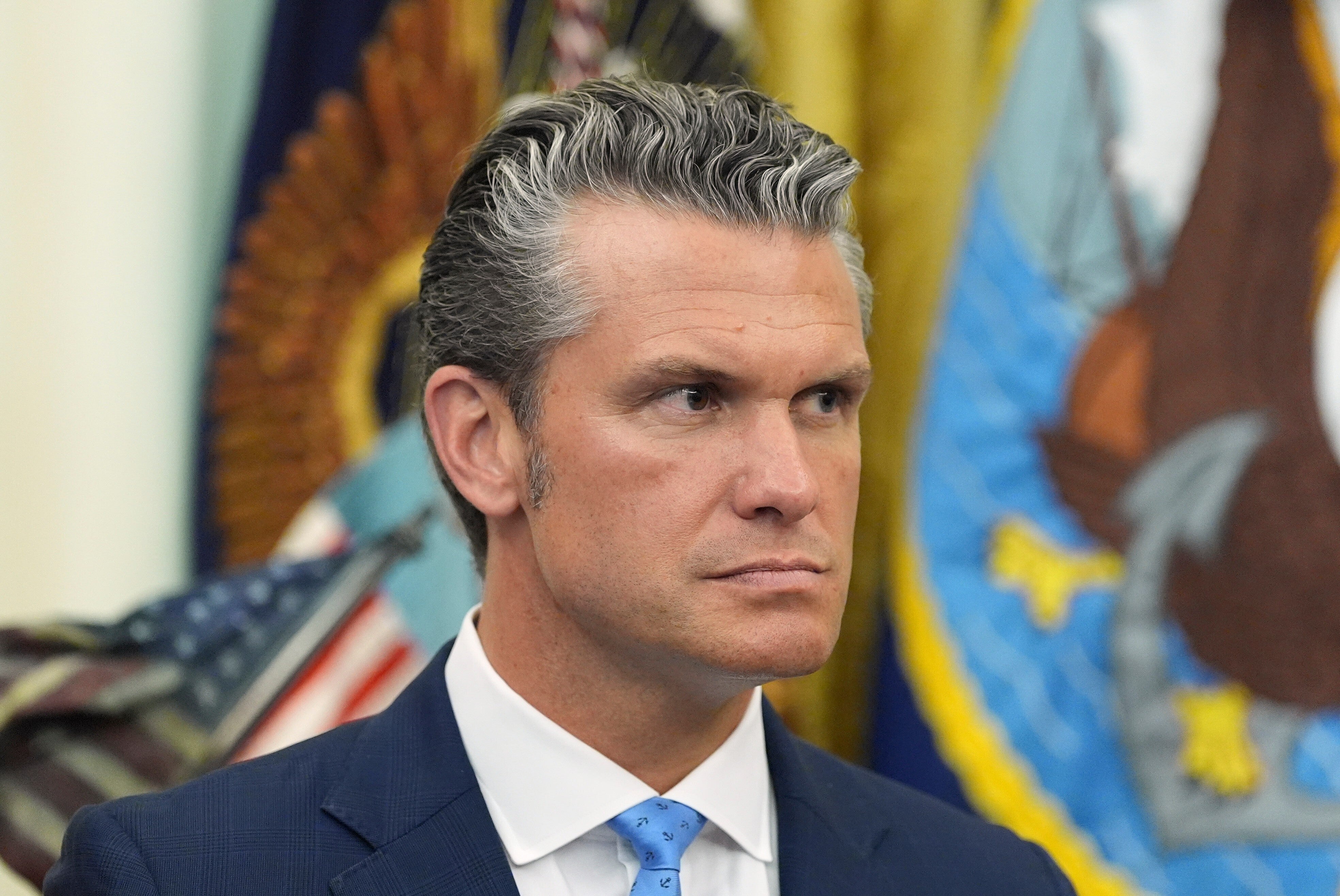
Back in the United States, Defense Secretary Pete Hegseth was woken in the middle of the night with the news. He said he immediately jumped to the next steps: asking if the crew was OK, and whether Iran knew what had happened. "Whether they're alive or not, we're going to go get them," he said.
Evidence of the wreckage was shared by Iranian media, and videos emerged online of armed groups hunting for the downed crew. According to U.S. military sources, Iranians got to within a few hundred meters of Bravo. "There was clear intent out of the Iranian ground force to come find those two guys," Gen.
Dan Caine, chairman of the Joint Chiefs of Staff and a former fighter pilot himself, said. During the "race against time," the U.S. military closely tracked Iranians in the area, Cooper said. One of the most complex rescue operations in U.S. military history Six hours in, the U.S. was able to rescue Alpha in a risky daytime raid.
American helicopters in the rescue force took fire. "It was a gun fight all the way in and all the way out," Hegseth said. "But they got Alpha back." The job was only half done.
Alpha's rescue force was unable to find Bravo and withdrew. But as night fell on that first day in Iran, Bravo was able to send a message back home. "When I got to the moment where I could review and think about all that I'd gone through, I sent, 'God is good,' as a recognition of all that he had brought me through," Bravo said.
He also alerted the U.S. military he'd been hurt, but that he was moving. A rescue force was almost sent in not long after, but Hegseth said "it just didn't line up." "That was a really tough decision," he said. "I'll never forget, you know, being in the situation room and saying, 'OK, I guess we're gonna roll 24,' which means, 'Hey, Bravo's going to be out there for basically 24 hours more.'" Secretary of Defense Pete Hegseth.
CBS News Bravo survived with almost no water or food, in the wind and cold of the high mountain desert, for another full day. The CIA played a pivotal role in Bravo's rescue. The agency launched a multi-pronged deception campaign to confuse Iranian forces looking for Bravo.
It also used top-secret technology to pinpoint Bravo's location. To clear the way for Bravo's rescue, newly declassified video shows American bombers and drones hit Iran's Revolutionary Guard forces nearby where he was hiding. Then it was time to go back in for Bravo.
There were over 90 U.S. service members on the ground — the first U.S. boots on the ground in Iran in 46 years, Adm. Cooper said. Several hundred people were in the air, and several thousand served as support in the rescue mission.
"I think what you need to know is we would have sent more to go get the back-seater," Gen. Caine said, referring to Bravo's position in the fighter jet. The force came in on two large search-and-rescue planes and landed on a makeshift desert airstrip.
Then they launched small "Little Bird" helicopters capable of reaching Bravo on the ridgeline, several miles away. "One of the greatest moments of my life" Bravo said it was "one of the greatest moments of my life" when he saw his rescuers. While Bravo doesn't want to share the exact details of his conversation with them, he did share what he said when they first got to him.
"Let's go." But Bravo and the others on the ground were not yet out of danger. The rescue planes' landing gear was stuck in the desert sand of the makeshift airstrip. The planes could not take off, and more than 90 of what Admiral Cooper described as the military's "most elite service members" were stuck until a clandestine Air Force unit came to the rescue.
The U.S. destroyed the two marooned aircraft, worth about $100 million each, as well as the Little Bird helicopters, so the technology wouldn't fall into Iranian hands. Declassified video of the rescue. Vantor Fifty hours after being shot down, Bravo was safe, rescued as the sun rose on Easter Sunday.
Not long after leaving Iran, Bravo called his wife back home in the U.S. "I was really proud of her and grateful for the strength that she showed," Bravo said. The officer says he wants the American people to know that the rescue is about more than what he went through.
"It's a story of the teamwork, the training, of the faith, of the decisions and the leadership to do something that will live in history as an example of what America's willing to do, in order to uphold our promise and leave no man behind." In: Iran Pete Hegseth United States Air Force
Source: CBS News