Parents who decline to vaccinate their children have been called selfish and stupid . They’ve even been accused of child abuse . But what if they’re actually acting logically?
That’s the conclusion of Jennifer Reich, a sociologist at the University of Colorado, who has spent the better part of two decades studying these families’ immunization decisions. Reich is not anti-vaccine; her children received vaccines according to the Centers for Disease Control and Prevention schedule. But she sees parents’ decisions to go a different way as a logical outgrowth of the push for them to be savvy consumers in an increasingly complex world, to make informed decisions about everything that could affect their children’s health.
Vaccine skepticism is also in some ways an outgrowth of our modern wellness culture. While well intentioned, messages that people can prevent illness through individual choices — like having a step goal or counting calories — has sown a belief in certain parents that they can prepare their children to weather an infectious disease should one strike, Reich argues. STAT spoke to Reich ahead of her appearance at the upcoming STAT Summit , and in light of the ongoing measles outbreak in Pennsylvania.
The Q&A below, which has been compiled from two interviews, has been edited for length and clarity. You spent a lot of time talking to parents who reject vaccines, and I’m curious what you’ve taken away from that. At the time I started thinking about this, the narrative was really that parents were selfish or anti-science.
They were dumb ... And I found that to be untrue. In talking to parents, I saw that they made really sophisticated decisions that were focusing on their child, and they were weighing scientific information to evaluate if they thought their own child would most benefit from a vaccine.
The more I talked to families and pediatricians and experts, the more I started to recognize that vaccine hesitancy, in a lot of ways, is a logical outcome to the cultural pressures we’ve put before families. We ask parents every day to make perfect decisions about their health, about schooling, about purchases and groceries and food and tutoring ... We never ask parents to worry about other people’s children, and from that perspective, rejecting vaccines that don’t feel particularly relevant to you or your children seems actually quite logical.
What do you mean when you say that parents who are skeptical of vaccines are acting rationally? In talking to families, I heard mothers in particular spend tons of time trying to understand the science of each vaccine, trying to understand the risks and benefits as they understood them, but also really questioning the benefits of all vaccines for all children. And I would say that at many times, the answers they reached were not anti-science.
They weren’t even unscientific. They were just using a logic that asks whether their own child will benefit most from this vaccine, and not what kind of impact it will have on others. I ask because I can imagine some folks saying ‘If people aren’t acting on the best peer-reviewed science, there’s no way they’re acting rationally’.
I can give you an example from some of the parents I spoke with. What I often heard was parents’ acceptance that there is population data that speak to the collective patterns of infectious disease, and most of them didn’t doubt that those data were real. But they really couldn’t find ways to understand how that data was useful in predicting the experience of their family and their children.
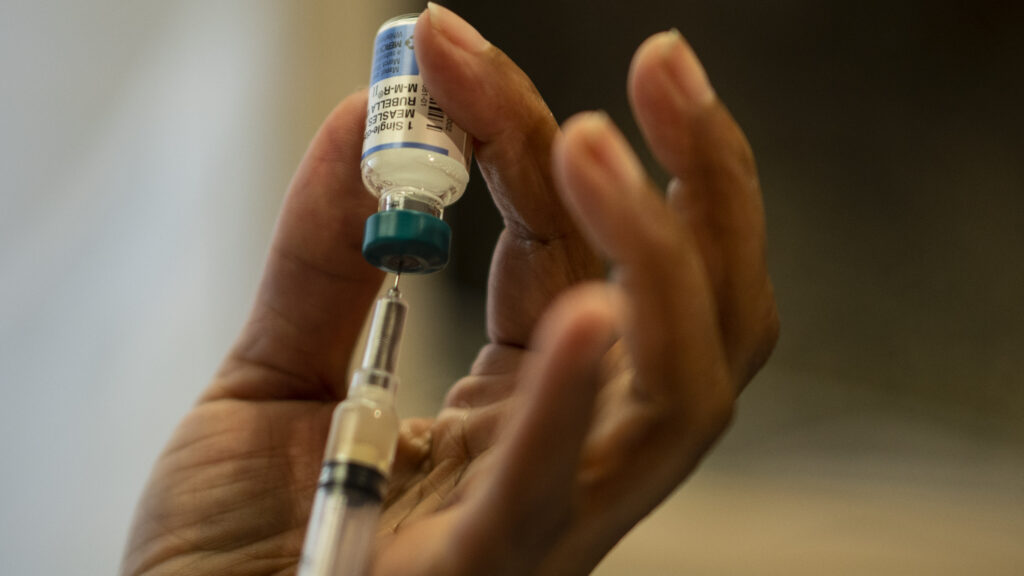
And within the context of a cultural message that says if you work really hard and you have high quality food, and you breastfeed your children, and you take care of their health, they’ll be fine, the logic that population data would speak to their individual circumstance seemed illogical to them ... I also heard parents say that as they were evaluating each vaccine for each of their children, they sometimes arrived at different decisions for each child. And so I had a mother explain to me that she didn’t see the relevance of something like a rubella vaccine for her son, who will never be pregnant, understanding that rubella is a pretty mild illness for the person who’s infected, but is a devastating illness if a pregnant woman encounters it ...
And so she accepts that science, but she just points out that her son will never be pregnant and therefore doesn’t benefit from that vaccine. And that’s not unscientific, but it ignores the fact that her son is likely to live in a community with pregnant people ... And so he has some responsibility to prevent a bad outcome, but it’s not untrue that he won’t personally benefit from that vaccine.
Is it fair for me to assume in seeing these folks as logical, that doesn’t necessarily mean you agree with their conclusions? I think if we can acknowledge the kinds of logic people bring to these conversations, it creates the possibility of having better conversations. If we dismiss what they’re saying without any acknowledgement that they have read a great deal, they have understood information, and they’ve come to different conclusions, it gets really hard to create a shared sense of understanding from which to move forward.
Parents all want healthy children. They all want healthy communities, and they largely see themselves as good people. And so the idea that they are intentionally harming other children doesn’t ring true, but we also don’t acknowledge how many things parents fear every day when it comes to their children, and vaccines are one of the few things we ask parents to actively consent to ...
It’s often the one [thing] that parents identify that they can control in a world of things that often feel uncontrollable. And there’s an opportunity for public health experts and health care providers to take their concerns seriously and to think about how to engage where they are, rather than writing it all off as misinformation. When you are speaking about these cultural pressures — what are the roots of that?
When did that begin? I think most people attribute the rise of the modern anti-vaccine movement to the 1980s, when parents began organizing with questions about the whole cell pertussis vaccine. ... But I think there’s really no way to think about the individual pressures to make health care decisions and to take responsibility for your own health, separate from a lot of the things that were happening around the same time period.
So, I think a lot about the women’s health movement, for example, in the late 1960s and into the 1970s ... We can also think about groups like ACT UP who were pushing back on FDA process and testing of medications to treat AIDS and how that really changed conversations about science and created a notion of the lay expert — that individuals who had firsthand knowledge had a valuable perspective. And I’d say that both of those are examples of ways that health care became better with patient input.
And so we have a backdrop in other places besides vaccines where we can see similar kinds of cultural changes happening. What is your sense of how people sort of end up here? All the factors you lay out make sense, but obviously, some parents internalize those responsibilities, and that leads them to simply follow the advice of their doctor.
In the same way that I really don’t think health literacy is the whole problem, I’m also a little bit dubious about the claims that it’s all misinformation. I really start with the premise that people are experts on their own lives. They know themselves.
They know their families the best, and we have to take that experience and that lived knowledge really seriously. And so, from that perspective, then we can say, how is it this happens? In my research, I often heard stories from mothers who started out really supportive of vaccines, and then had some negative experiences in health care that started with their birth experience, or started with their experience of prenatal care, or a feeling that they wanted to have a conversation with a pediatrician and the pediatrician didn’t have enough time to have the conversation they wanted to be having.
In a lot of ways they started to feel alienated from the systems that they thought were there to support them, and they found support in other places, whether it was a new moms group that had lots of people who were vaccine critical, whether it was looking for alternative health care providers and ways that they could feel that their concerns were taken really seriously, or whether it was an online community that validated their concerns. I think we can take that really seriously, not as a failure of any one pediatrician or any one parent, but we can ask questions like, “How is it that health care appointments have become shorter and shorter over the last decade?” “How is it that the average pediatric appointment is something like 11 to 16 minutes?” And we know that health care providers are also really unhappy too. If we accept the premise that parents are, in fact, acting logically, how does that change how public advocates solve this problem?
I don’t think it’s sacrificing a lot of ground to say that we start with the premise that parents are behaving in ways that are rational and that they want the best for their children, and there’s a couple ways I think that this matters. It’s easy to dismiss parents as irrational and that they’ve just consumed too much misinformation and that’s led to their decisions. And I think that’s ignoring how much work most parents put into making this decision for themselves and their children.
There is misinformation, but there’s also a lot of confusing official information, and I think it’s worth acknowledging that right now, without clarity of information, doing less may feel safer ... Parents may be overestimating what they can control, but it’s not reasonable to say that it’s completely irrational as a response to the parenting information they’re given every single day. Starting from pre-pregnancy, starting from preconception, parents are told to start managing their health, to start managing all possible risks through nutrition and vitamins and supplements and exercise.
And so, parents don’t come to this by themselves. They’re actually responding to the medical advice they’ve been given for years, sometimes decades, and I think taking that seriously creates the possibility of really communicating about the limits of each of our abilities to manage risk and control disease, and to take some of the burden off of parents by assuring them that there’s some good tools available to help them through this. It strikes me that this comes back to this idea that we just need to be having a much more nuanced conversation and in-depth conversation about vaccines.
If you’re a parent that has internalized this responsibility to be the guardian of your children’s health, you’re going to be expecting that sort of in-depth conversation with your health care provider. And if we’re not having that, then those people are feeling like they’re being steamrolled. I feel like that’s such an important point because the number of times parents are told to “do their own research,” but then vaccines are held up as a kind of exceptionalism — on this one thing, do exactly what we say — that doesn’t make any sense culturally.
There’s nothing else that looks like that. STAT’s coverage of trust in science and public health is supported by the Dana Foundation, Greenwall Foundation, John Templeton Foundation, and Boston Foundation. Our financial supporters are not involved in any decisions about our journalism.
Source: STAT