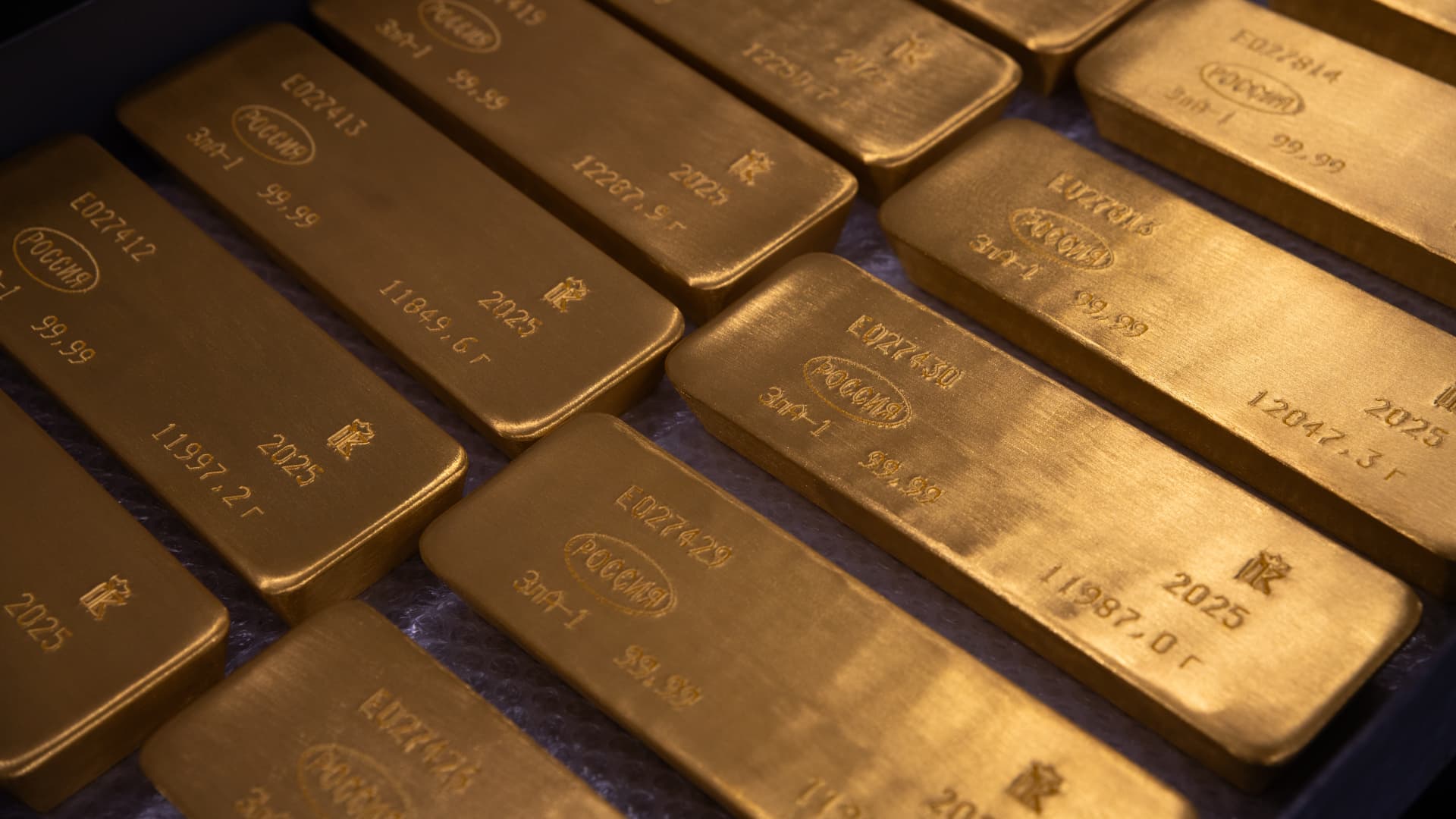
KRASNOYARSK, RUSSIA - JUNE 16: A view of the production of silver granules and gold ingots in Krasnoyarsk, Russia on June 16, 2026. Krastsvetmet (Krasnoyarsk Non-Ferrous Metals Plant named after V.N. Gulidov) is one of the world's largest producers of eight precious metals and their products.
It processes all types of mineral and secondary raw materials. Krastsvetmet's products meet international standards and are included in 'Good Delivery' lists (high delivery quality) on international markets. (Photo by Alexander Manzyuk/Anadolu via Getty Images) Anadolu | Anadolu | Getty Images Gold slipped to its lowest level in more than two weeks on Thursday as a rally in oil prices heightened inflation worries, with the Federal Reserve due to deliver its policy decision next week. Spot gold slid 1.4% to $4,081.89 per ounce by 0902 GMT.
US gold futures for December delivery fell 1.3% to $4,097.90 per ounce. "Gold prices can fall further... because we are still seeing a lot of uncertainty around the energy market," said Soni Kumari, analyst at ANZ. Oil prices rallied over $2 a barrel on Thursday after more Houthi attacks in Saudi Arabia stoked concerns over a broader escalation of conflict and further disruptions to crude supplies.
While gold is typically considered a hedge against inflation, higher interest rates reduce the appeal of the non-yielding asset. Last week's US consumer and producer inflation data came in hotter than expected, largely because energy costs keep climbing. That strengthens the case for tighter policy, even though Fed officials are still expected to hold off when they meet on October 27-28.
Goldman Sachs expects one more 25-basis-point hike in December, lifting the peak policy rate range to 4.00%-4.25%. Traders are pricing in a 91% likelihood of an increase in December, according to CME's FedWatch Tool. US Personal Consumption Expenditures (PCE) data, set for release on October 29 and closely watched by the central bank, could give more clues on rate outlook.
"Given that the PCE data will show that prices rose at an uncomfortably high pace for the Fed, the FOMC communications may strike a hawkish tone and that could weigh on gold prices," Hamad Hussain, climate and commodities economist at Capital Economics, said.
Source: CNBC