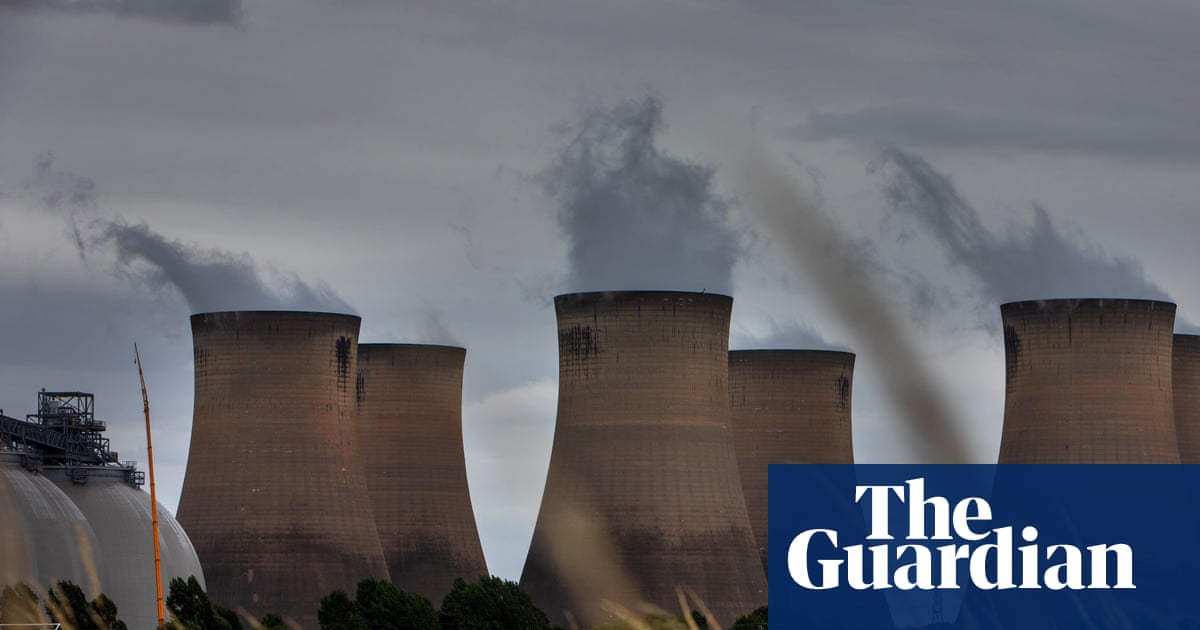
Britain’s most polluting power plant could soon power the country’s largest datacentre under a £20bn deal to build AI infrastructure on the site of the Drax power plant in North Yorkshire. The power plant’s FTSE 250 owner has struck a deal with the infrastructure investor Brookfield and and the AI infrastructure platform Radiant to develop a datacentre with an eventual capacity of more than 1 gigawatt that could begin operations by early 2028. In the initial phase of the project Drax will provide the datacentre project with land and access to the national power grid through existing connections on the site, but it hopes to begin powering the datacentre directly by the early 2030s.
Drax said the development could attract more than £20bn ($26.8bn) in investment and represent “the next chapter” for the former power plant after ministers signalled plans to limit its power generation in the future. The Drax chief executive, Will Gardiner, said the project would “help secure the long-term future of the site and protect hundreds of jobs” while “supporting the north’s reindustrialisation and strengthening sovereign AI capability”. The largest power plant in the UK produces almost 5% of the country’s electricity by burning woody biomass pellets, making the site the single largest emitter of carbon dioxide, according to analysts.
These emissions are not accounted for by the UK government because Drax claims the equivalent carbon emissions are absorbed by growing trees that provide the waste wood used to make the biomass pellets. However, the government promised that Drax would play a “much more limited role” in future after growing concerns over the company’s sustainability claims , and will have access to only half its current £2m a day subsidies from 2027 to 2031. The company hopes to clear the regulatory approvals needed to begin supplying the datacentre directly before 2031 to secure its future revenues.
The news was welcomed by equity analysts, while the company’s market value climbed by almost 9% on the London Stock Exchange to almost £3bn. Under phase one of the project, the datacentre would be operational from the first quarter of 2028 with up to 100MW of compute capacity. skip past newsletter promotion after newsletter promotion The deal has emerged a week after the government published a draft national policy statement on datacentres which said they were “as fundamental to our economy as the railways and electricity networks on which we have long depended”. “We must take control over the development of datacentres in this country and ensure that the country and host communities benefit from them,” the government said.
However, the UK’s congested grid infrastructur e and ambitious legally binding climate targets have raised questions over how a dash to build datacentres could be powered without relying heavily on expensive and polluting off-grid gas generation.
Source: The Guardian