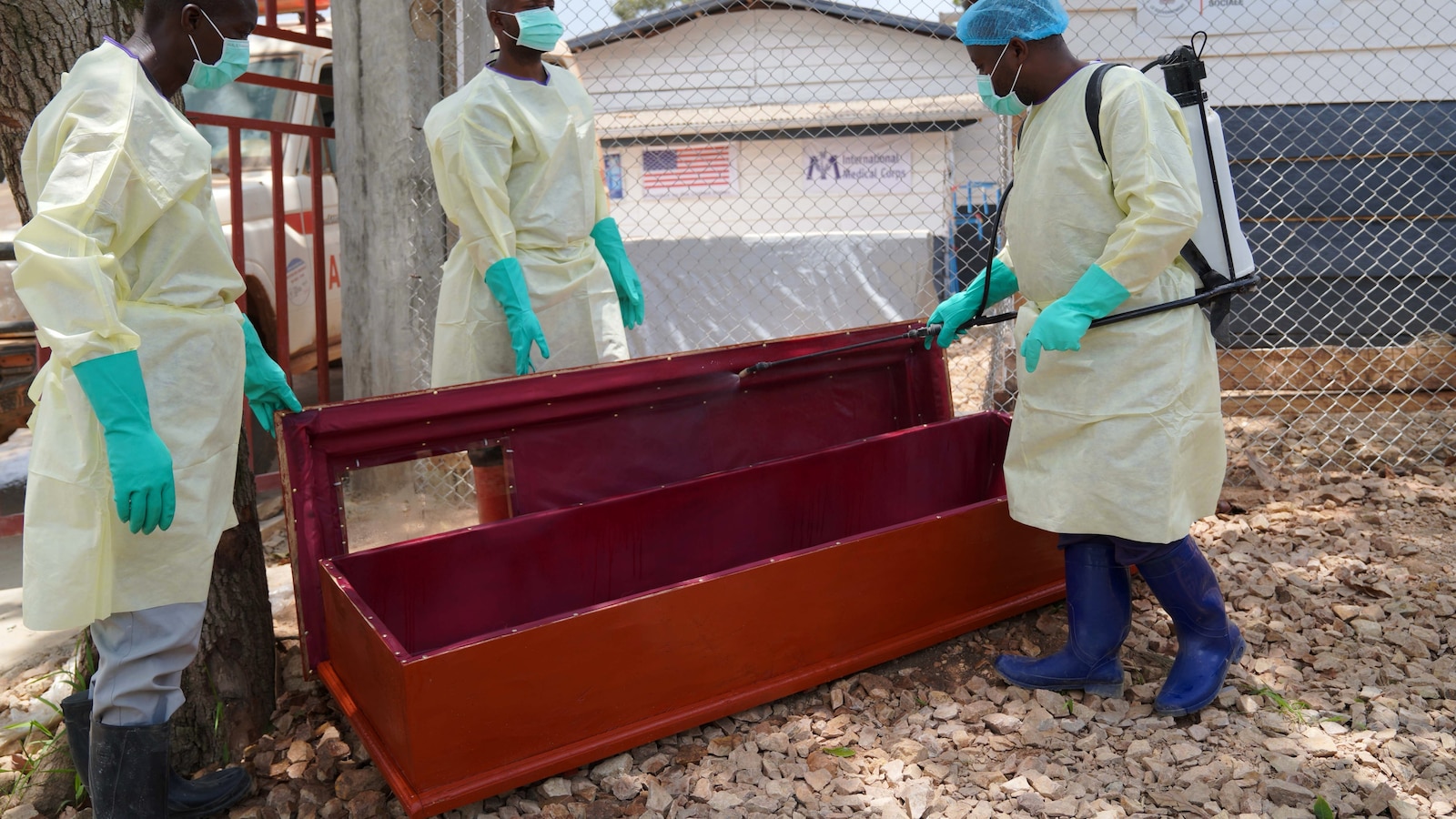
BUNIA, Congo -- Yuma Adolphe and his team handle the safe and dignified burials of Ebola victims in Ituri, the epicenter of the deadliest Ebola outbreak in history. Nearly every day, they dig graves, prepare bodies, and manage coffins. However, as the outbreak spreads, killing nearly 3,200 people among over 6,500 cases, the burial teams report being overwhelmed by workload and facing hostility from communities. They are paid $20 a day and are part of front-line workers trying to contain the disease.
Despite the challenges, their priority is community safety. They acknowledge physical and mental fatigue but continue their work. However, locals are frustrated by the outbreak, which has disrupted traditional burial rites. Health workers handle bodies exclusively due to the risk of Ebola transmission through bodily fluids. Attacks on burial teams by bereaved families have increased, as families are denied customary rituals. Jeanne Alasha, an adviser to the military governor of Ituri, states that such attacks are legally punishable.
Ituri province, where the outbreak is concentrated, is also a hotspot for rebel conflict. The province operates under a military government appointed by federal civilian authorities in Kinshasa. On Friday, Justine Habineno, a 36-year-old chorister, died of Ebola. Her mother, Sofia Wanito, expressed grief over being unable to handle her daughter’s body as per traditional customs, as health workers restricted access.
The Ebola outbreak spans six provinces in eastern Congo, exacerbated by rebel violence, displacement, and population movements. Weak healthcare and surveillance systems, along with insufficient contact tracing and laboratory testing, hinder containment efforts. The outbreak also lacks an approved vaccine or treatment for the Bundibugyo virus variant. Authorities have begun vaccinating front-line health workers with the Ervebo vaccine, though its efficacy against the current strain is uncertain.
Health authorities warn the true scale of the crisis may be three times higher than reported. The World Health Organization projects the outbreak could surpass the deadliest in history, the 2014–2016 West Africa outbreak, which killed over 11,000 people. Front-line workers in eastern Congo have gone on strike to demand fair pay, complicating outbreak control efforts.
Benjamin Muhindo, another burial team member, worries about bringing the virus home but emphasizes the need for proper burials under pressure. Trauma experts highlight the broader impact of the outbreak, noting that the trauma extends beyond case counts. Rose Tchwenko, Mercy Corps country director in Congo, stresses the need for an integrated holistic response, including support for bereaved families and front-line workers.
After a recent burial, Adolphe expressed exhaustion but prioritized community safety, stating, 'We have no choice; we are here to safeguard our community.'