ZDNET’s key takeaways Google Cloud executive says there is no blueprint for AI. Some of his best talent gets overwhelmed by the drive to keep innovating. The people who can best lead AI need to be a bit ‘crazy.’ No organization, no matter how high and mighty, can claim perfection in its AI implementations — but that’s OK, because it’s a learning experience for everybody.
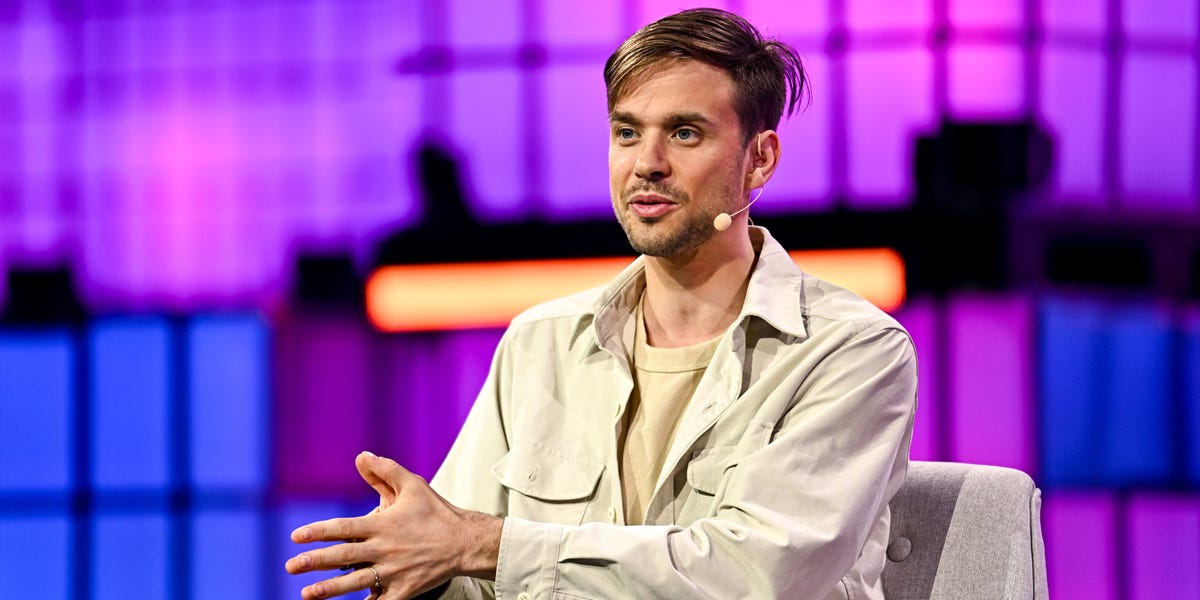
At Google these days, AI has everyone in learning mode. Richard Seroter, chief evangelist for Google Cloud, recently recounted the experiences his organization has had so far on its AI journey and shared what others can learn. His message, delivered at HubSpot’s recent Unbound conference in Boston, was that when it comes to AI, there is no blueprint; everyone is adapting as they go along.
‘Chaotic innovation’ Seroter provided a glimpse of chaotic innovation inside one of the world’s biggest tech companies as it embeds AI into its development processes. More from ZDNET Also: ‘I can’t stop’: 80% of developers find AI coding more addictive than helpful First and foremost, there’s a substantial impact on people who are tasked with keeping up with ever-changing models and related technologies. There are team members who have suffered from what Seroter called “productivity addiction,” in which the best talent runs the risk of getting burned out — a problem at fast-paced Google.
“You can’t afford to have some of the people who are doing your fastest work, the most aggressive work, be the ones who decide to leave to be a librarian,” said Seroter. Knowledge and development work used to be about 20% thinking and 80% execution, he explained. “It just flipped.
Now there’s 20% execution, and 80% deep thinking.” Also: AI agent kill switch urged by Okta-led alliance – how businesses could make it work “That’s a pretty big shift, and it’s mentally exhausting. It’s a different skill set. Some of us aren’t ready for that,” he noted.
Productivity addiction comes from wanting to tackle “just one more problem, just one more image, one more thing. We’re experiencing it ourselves. There are a lot of coders who are just working too many long, long days because they’re almost hooked on it.
We need a sustainable pace, but we have to find a way to still go fast.” The key is to help people understand there is no blueprint, no right or wrong way of doing things, Seroter emphasized. “This is not the time to just be burning them out. A few years ago, they were predicting a four-day workweek because of AI.
How did that work out? Well, the four-day workweek went the wrong way real fast. AI isn’t really reducing your work; it’s just intensified.” Implementing AI is a learning process for everyone involved.
“We’ve done some great things; we’ve done some weird things,” said Seroter. “We’re all learning as we go. Anybody who thinks confidently about this as the blueprint is probably lying to you.
Maybe they’re in marketing.” If anything, the people best equipped to lead business technology innovation through this AI-driven era are those who are a bit “crazy,” he said. “This is not the time for timid leadership. Because you’re going into places in your company and making people change something.
You’re taking risks. So you’re a little bit off the wall. So how do we lean into that?
How do you think about experimentation differently? Courageous leaders are those who come in and say, ‘We’re going to fail constantly for the next four weeks until we figure out the right way to do this.’ If you’re one of these people, this is your moment. You’ve got to stand up for the people who are doing the craziest work in your company.” The risk to enterprise innovation Technology professionals are in the jobs they have because they’re big thinkers, Seroter said.
“Don’t stop at that. We should be doing the hard parts of our jobs, sometimes purposely manually, because doing the hard stuff is what keeps us sharp and keeps us going. I don’t want to just simply be clicking the robot every day and not doing the hard stuff.” Also: Could AI really destroy us all, or are humans still the bigger threat?
This process of unconventional innovation means far more than simply employing AI. If anything, there’s a risk that enterprise innovation may lose its unique qualities, he warned. “When we all have access to the same teams and can do the same crazy stuff, how are you standing out?
Are we actually upscaling ourselves? Are we just burning out too fast? Who’s liable when AI makes a mistake?” That doesn’t mean just “pushing some change tables for four weeks to avoid the hard problem,” he continued.
“You need leaders who are going to protect champions, because you’re going to have people who disrupt you, and you want to know management has your back. So if you’re one of these people, this is your moment. You’ve got to stand up for the people who are doing the craziest work in your company.” Of course, everyone in the industry, from Google to the smallest tech firms, wants to do better with all the AI technologies coming their way.
“If you’re going to prompt really well, you need good information,” Seroter said. “You have to know industry terms. You have to know vernacular.
You have to know what you’re looking for. You have to steer these things.” Also: What workers are really using AI – and what they aren’t He compared AI to “kind of a crazy intern. I have to be able to steer the thing around.
That means I have to know what I’m talking about. Googlers are nervous about this, too. We need to get really good at steering the robot and using what we have as good engineers, or being good marketers, or being good salespeople.”
Source: ZDNET