The original Sonos Ace headphones should have been a triumphant entry into a new product category. Instead, they were overshadowed by Sonos’s disastrous app redesign . And while the original Ace are well built, sound good, and are incredibly comfortable, they weren’t good Sonos headphones: Their flagship feature let you reroute audio from a Sonos soundbar to the Ace headphones so you could listen to your TV audio without disturbing anyone.
But it was glitchy, and at launch it only worked with the $1,000 Arc soundbar, and only with one pair of Ace headphones at a time (Both of those have now been fixed). It also couldn’t connect to the rest of the Sonos system for music streaming. Now the Ace Ultra are here, at the same $449 release price as the Ace (which are now $349).
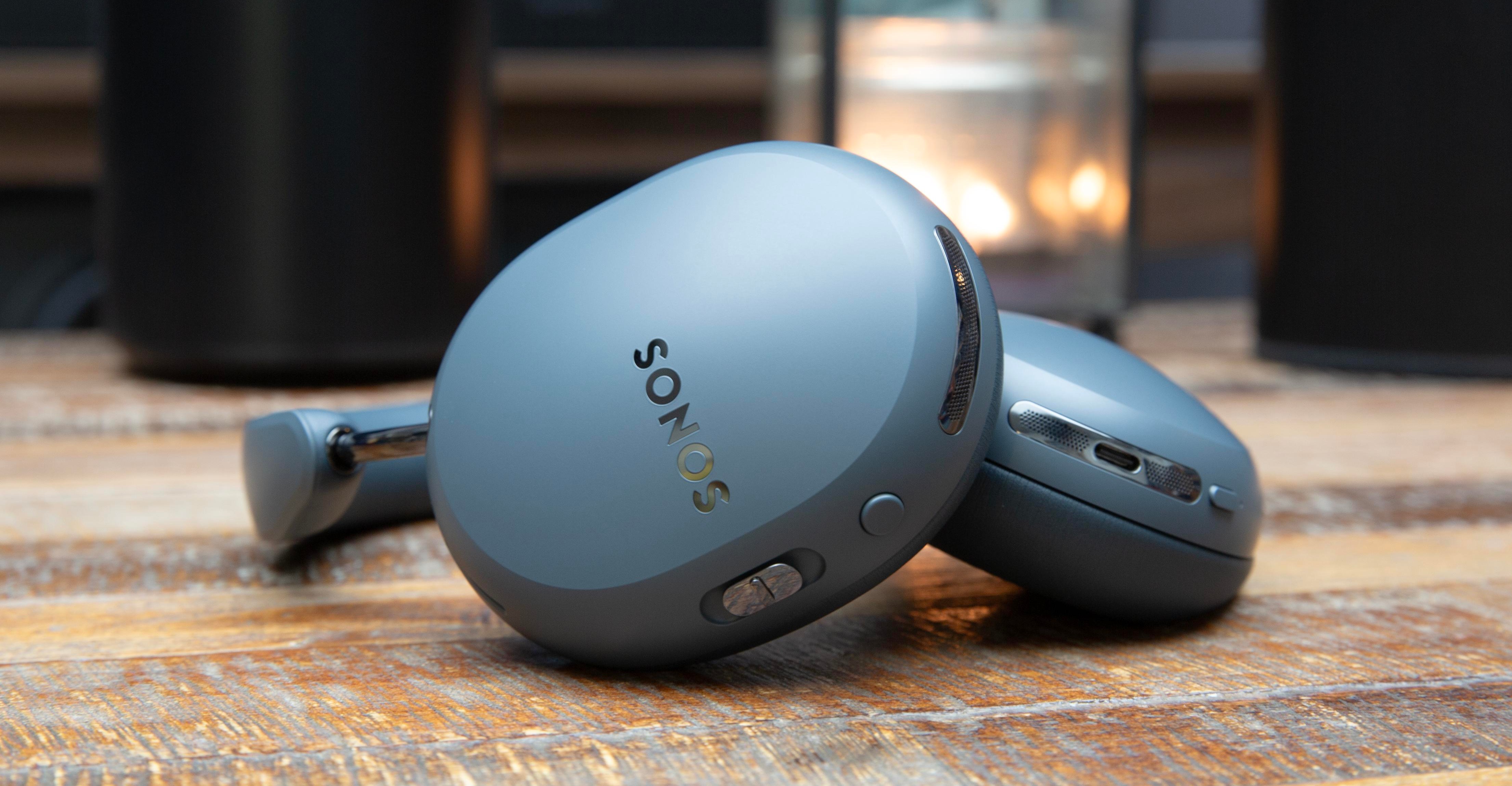
They’ve improved on what the Ace did well, while finally adding the ability to pass audio from your Sonos system to the headphones and back (although it’s in “early access”). They’re what the Ace should have been the first time. 8 Verge Score $449 The Good Can be used with Wi-Fi in a Sonos home system Improved sound profile and ANC performance Incredibly comfortable The Bad Headphones can’t be grouped with Sonos speakers Sound and ANC still aren’t quite as good as competitors Wi-Fi audio during early access is lossy The Sonos Ace Ultra have the same clean, understated look of the original, which I appreciate. They’re incredibly comfortable for hours on end, even while I’m wearing my glasses, and though they’re ever so slightly heavier than the Ace — 0.69 pounds to 0.71 pounds with the Ace Ultra — that weight was never a problem.
The ear cups are squishy and spacious, and like the Ace’s ear cups, they’re also magnetic and easily removable; Sonos sells extras for $39 a pair . The battery is also user replaceable ( a kit costs $25 ), although a statement on the battery kit listing does warn that “swapping out the battery requires disassembly and tools, plus some time and patience.” The headphones also keep the tactile buttons and Content Key volume slider of the Ace instead of using capacitive buttons like the Sony XM series or Bose QuietComfort Ultra. I loved this setup and I’m glad Sonos kept the real buttons on the Ace Ultra.
The Content Key reacts quickly and is easy to find while wearing the headphones. And its button functionality allows you to access the Sonos-specific features of TV audio swap and headphone linking. The Content Key control acts as both a slider and a button, and it’s very intuitive to use.
The Ace Ultra support lossless audio over USB-C. While the original Ace came with TV audio swap, that was the extent of their Sonos system integration. The Ace Ultra have rectified that, albeit with a caveat, by adding headphone linking.
The headphones now show up in your system list, and with a press of the slider button, you can move your music from any Sonos speaker or speaker group — not just TV audio from the soundbar — to the headphones and vice versa. That includes audio coming into the Sonos system from a record player or CD player or anywhere else. Both TV audio swap and headphone linking use a Wi-Fi connection.
It’s not flawless; sometimes I’d have to press the button a couple times to get the transfer to happen. If you pull the audio from your speakers to the headphones and decide to send it back later, it only goes to the closest speaker in your system, not whichever speaker or group was playing before. Adding it back to a speaker group has to be done in the Sonos app.
The headphones also cannot be grouped with any speakers. I suppose the thinking is, if you’re listening to music on your headphones you don’t need it also playing from your speakers. One nice touch is that if you have different music playing on different speakers, pulling the music to the headphones from one doesn’t affect the rest of them.
Headphone linking is in early access, according to Sonos , so it’s possible the experience will change. As Sonos’ own Wi-Fi vs. Bluetooth explainer points out, one of the main benefits of Wi-Fi audio streaming is that the higher bandwidth allows for hi-res and lossless audio.
But right now, the Ace Ultra don’t take advantage of that. During the headphone linking early access period, audio over Wi-Fi with headphone linking is lossy. (Sonos has not said how long the early access period will last). Senior director of product management Andrew Sutherland told The Verge via email, “our focus right now is making sure the core experience is genuinely solid and reliable for listeners by using a high-quality, lossy-compressed stereo audio stream optimized for listening over WiFi.
We’ve been really happy with the results. We’ll continue to build out its capabilities from there.” I appreciate the cautiousness in making sure headphone linking works properly, but it’s disappointing that Sonos shipped a product with one of its flagship features still in beta. There’s a magnetic pouch in the case to hold the included USB-C-to-USB-C and USB-C-to-3.5mm cables.
At the moment, the Ace Ultra only support lossless audio over Bluetooth with aptX Lossless and a compatible device, or over USB-C. The wired USB-C or 3.5mm connection maxes out at 16-bit/48kHz, though, so there’s no high-res audio. There will surely be lots of debate on the forums about the tragic lack of high-res support, but the reality is most people won’t be missing anything.
Newly designed 40mm drivers sound better than those on the original Ace, and an adaptive EQ makes real-time adjustments based on fit and any obstructions — such as glasses’ temples or earrings. The bass is richer without overpowering vocals, which is most evident in songs with a thumping low end, like Billie Eilish’s “Bad Guy” (one of my go-to bass tests). The kick drum through the verse and chorus has weight and drives the energy forward while the rhythmic bass line supports the voice.
There’s also good stereo separation on “Killer Queen” by Queen with lead guitars to the left and right of the soundstage. I do wish the Ace Ultra had better midrange clarity, especially on busier tracks like Radiohead’s “The National Anthem” and its cacophonous middle section. The 8-band EQ Sonos added to the Ace Ultra (sorry original Ace owners, this isn’t for you) helps this a bit when I boosted the mids at 460Hz and 1kHz a little.
While in there, I also added more high frequencies to open up the sound. With the tweaks, I got the Ace Ultra to a place where I enjoyed my listening across genres. It’s a good step forward from the original Ace, although I still prefer the Sony XM6’s default sound profile.
Streaming music can be moved from a Sonos speaker to the headphones with a press of a button or through the Sonos app. The Ace Ultra’s active noise cancellation (ANC) is better than the Ace’s and now includes an adaptive version. It’s still not as strong as the ANC on the Sony XM6, Bose Ultra Headphones, or Apple AirPods Max 2 — it lets in more midrange and a few higher frequencies, as well — so if you’re mainly using them to block out ambient noise, those three options are better choices.
But if you’re using ANC paired with music playing, the Ace Ultra perform well. Call quality is also better. When I was on a video call while my wife was having a phone conversation 20 feet behind me in the kitchen, the Ace Ultra kept her voice and other ambient noise quieted.
They had a bit more trouble keeping out the noise when I went outside to a busy street — the Sony XM6 are much better at this — but I still sounded clear and easy to understand. Sonos has upped the battery life, from up to 30 hours on the Ace to up to 35 hours with the Ace Ultra. They come with the same felt-covered case with a magnetic removable pouch that stores the USB-C to USB-C and USB-C to 3.5mm cables.
Sonos has taken a great first shot at headphones and followed up with an even better pair. They have improved sound, better ANC, and Sonos-specific features. And they’re one of the most comfortable pairs of headphones I’ve worn in a while.
The Sonos Ace Ultra come in four colors — black, white, agave, and sand. But to get the most out of the Ace Ultra, you need to be an existing Sonos user, or be ready to spend hundreds more dollars. The cheapest Sonos soundbar that works with TV audio swap, the Ray, is still $219.
And headphone linking is only useful if you have Sonos speakers. If you do have a Sonos soundbar and speakers and you’re looking for headphones, the Ace Ultra are an easy recommendation, especially over the original Ace — even though those are down to $350. If you’re not in the Sonos world, though, the Sony WH-1000XM6 (or even the older XM5) with their better ANC and sound quality for less money, are a better bet.
Photography by John Higgins / The Verge Follow topics and authors from this story to see more like this in your personalized homepage feed and to receive email updates. John Higgins
Source: The Verge